Choosing LLMs for AI Agents in 2026: Cost, Latency, Intelligence Tradeoffs
Last updated on May 14, 2026
Ask our AI advisor
A live voice session with the AI advisor that has this article, and years of our experience building production voice AI systems, behind it. Answers now, nothing to schedule.
Want a human instead?
Book a call with our engineersThe AI agent prototype works. Demos go well. Then production reveals the problem: $47 per user conversation. Or the voice agent feels sluggish – users notice the 2-second pauses. Or it handles 80% of scenarios perfectly but fails unpredictably on the other 20%.
These aren’t three separate problems. They’re three dimensions of the same decision: which LLM to use.
The Three-Dimensional Tradeoff in LLM Selection
Every LLM gives three knobs: cost, latency, intelligence. Maxing out all three is impossible.
Cost Considerations for Large Language Models: Token pricing still varies enormously between models. Qwen 3.5 Flash sits at $0.10 per million input tokens; Claude Opus 4.7 at $5; GPT-5.5 Pro at $30. Same API call, vastly different economics. And with prompt caching now standard across all major providers, the effective price is 10–25% of headline for the cached portion of each request.
Latency Implications for Voice and Chat Agents: For voice, end-to-end voice-to-voice TTFT in May 2026 clusters between 0.78s (xAI Grok Voice Agent) and ~2s (most speech-to-speech models), with Gemini 3.1 Flash Lite and Claude Haiku 4.5 dominating the cascaded-pipeline tier. For chat, generation speed matters less than reasoning-mode choice: turning reasoning on adds 8–200 seconds per response. For user-facing voice turns, default reasoning OFF regardless of any heuristic. See our voice-agents LLM guide.
Intelligence and Reliability of LLMs: Reasoning capability, output quality, and reliability varies significantly between models. More expensive models typically offer superior reasoning, complex problem-solving, sophisticated understanding, and more consistent outputs. Intelligence includes both raw capability and reliability (output consistency and prompt following accuracy). For production systems requiring deterministic behavior, particularly multi-agent workflows, this consistency matters. Random failures destroy user trust faster than consistent mediocrity.
The question isn’t “which model is best.” It’s which dimension matters most, and which tradeoffs are acceptable.
Diagnosing Your LLM Constraints
The Cost Problem
Symptoms: Prototype costs scale linearly with users. Current model costs make target price point impossible. Burning through runway on inference costs.
Diagnostic: Calculate cost per user interaction. If it’s >$0.50 and the target is <$0.10, there’s a cost problem, not a latency or capability problem. Adjust both numbers for prompt-caching-eligible content and Batch API discounts before concluding.
At 10,000 daily users with 5 exchanges per session, Claude Sonnet 4.6 costs approximately $2,250/day uncached. With prompt caching applied to the static system-prompt portion, that drops 60–80% in production teams we’ve worked with. Qwen 3.5 Flash for the same volume runs under $15/day. Unit economics shift from unviable to sustainable.
Models to consider: Gemini 3.1 Flash-Lite, Qwen 3.5 Flash ($0.10/M input), DeepSeek V4 Flash ($0.14/$0.28), GPT-5.4 mini.
The Latency Problem
Symptoms:
- Voice agents: Users experience noticeable pauses (perceived latency >1.5s)
- Chat agents: Users send follow-up messages before response arrives (>2s)
- Real-time applications: Response speed affects core experience
Diagnostic: Measure time-to-first-token. If LLM processing is >60% of total latency, model choice is the bottleneck.
For a cascaded voice-agent pipeline, end-to-end latency now budgets to roughly: STT ~50–150ms, LLM TTFT ~300–500ms, TTS ~75–150ms, network/overhead ~150ms. The 2026 consensus is ~800ms total voice-to-voice as the target, not the legacy “sub-250ms response” number, which referred only to start-of-response in older guides. P50 <1.5s and P95 <5s are the practical production thresholds.
Chat agents tolerate up to 2 seconds before users notice. This fundamentally changes model selection.
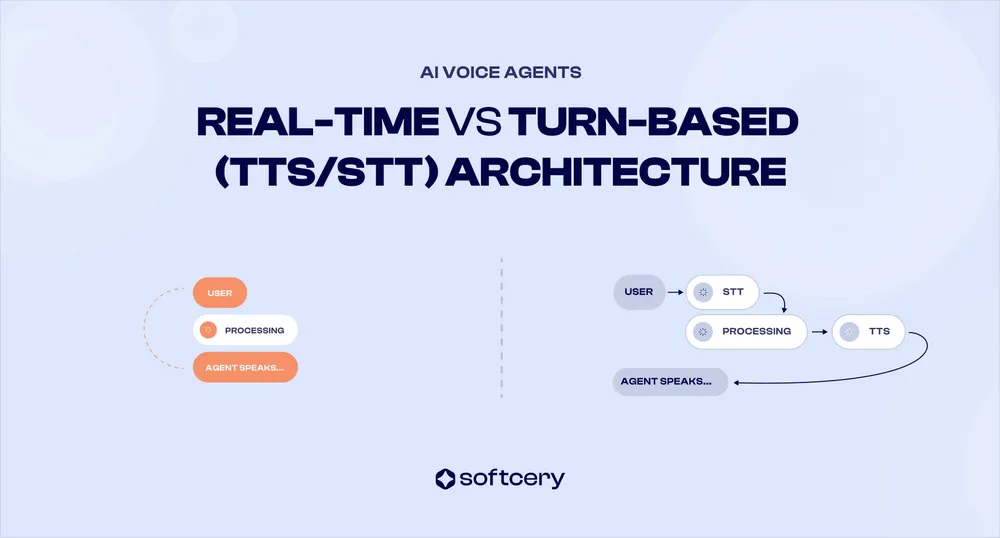
Models to consider for low-latency voice: Gemini 3.1 Flash-Lite (highest TPS at Tier-1), Claude Haiku 4.5 (sustained 86–116 tok/s), Grok 4.1 Fast (0.59s TTFT for voice specifically). For the speech-to-speech alternative architecture, see Realtime vs Turn-Based.
The Capability Problem
Symptoms: Agent fails on complex scenarios despite prompt engineering. Reasoning breaks down on multi-step tasks. Output quality varies across runs – works in testing, shows unpredictable failures in production.
Diagnostic: The hard part – is it model ceiling, implementation, or output variance? Test with a stronger model (Claude Opus 4.7, GPT-5.5, or Gemini 3.1 Pro). If problems disappear, it’s model capability. If consistency improves but quality stays acceptable, it was variance. If problems persist, it’s architecture or prompting.
Note: Set temperature=0 and use structured outputs (JSON mode, schema validation) to reduce variance before concluding the model itself is the problem.
A legal document analysis agent failing to extract nested clauses might need Opus 4.7’s reasoning depth. A customer support chatbot answering FAQ questions probably doesn’t.
The benchmark stack that matters in 2026. MMLU and HumanEval are saturated and not cited in serious 2026 model launches. Use these instead:
- SWE-bench Verified – agentic coding eval. GPT-5.5 leads; Opus 4.7 close behind at 87.6%.
- TAU-bench / Tau2-bench – tool-agent-user eval; the benchmark for enterprise customer-service agents. Measures policy adherence, not just task completion.
- GPQA Diamond – PhD-level science. Frontier above 94%; PhD humans 65%.
- Terminal-Bench 2.0 – agentic shell execution.
- OSWorld-Verified – computer-use eval.
- GDPval (OpenAI) – knowledge-work across 44 occupations.
Models to consider for hard reasoning: Claude Opus 4.7 (87.6% SWE-bench Verified, lowest output variance for multi-agent), GPT-5.5 (SWE-bench leader cohort, OSWorld 78.7%, GDPval 84.9%), Gemini 3.1 Pro (94.1% GPQA Diamond). Reach for reasoning-high mode only on the ~15–30% of queries that genuinely need it; it costs 8–200 seconds per response.
Model Selection Matrix for AI Agents
Voice Agent Model Recommendations
Hard constraint: ~800ms end-to-end voice-to-voice. LLM is roughly 40–50% of this in a cascaded pipeline.
Recommended (cascaded pipeline, production phone deployments): Gemini 3.1 Flash-Lite or Claude Haiku 4.5
- Sub-500ms LLM TTFT in same-region deployments
- Strong tool-calling support
- $1/$5 (Haiku 4.5); Flash-Lite is cheaper at Tier-1 TPS
Alternative (speech-to-speech for web/in-app): Gemini 3.1 Flash Live or OpenAI GPT-Realtime-2
- Single multimodal model, no separate TTS step
- ~960ms typical voice-to-voice for Gemini 3.1 Flash Live
- Higher cost; OpenAI Realtime ~10× a cascaded pipeline due to context accumulation
Phone vs web is the decision: Cascaded pipelines remain the production standard for telephony: PSTN’s 8 kHz audio degrades S2S advantages while preserving premium pricing. See Realtime vs Turn-Based Voice Agent Architecture for the deep tradeoffs.
Architecture note: Streaming is mandatory. Prompt caching for the system-prompt portion cuts repeated-cost by ~90% across a 10-minute call. Semantic caching can reduce common responses to 50-200ms.
LLM Recommendations for Chat Agents Handling Complex Reasoning
Primary need: Reliability and sophisticated reasoning.
Recommended: Claude Sonnet 4.6 or Claude Opus 4.7
- Sonnet 4.6 leads the TAU-bench cohort for customer-service agents (87.5%)
- Opus 4.7 leads on Aider Polyglot and ties SWE-bench cohort (87.6%); 1M context at standard pricing
- Most predictable outputs across runs (lowest variance for multi-agent workflows)
Cost: Sonnet 4.6 $3/$15; Opus 4.7 $5/$25 (1M context, standard pricing)
Use cases: Legal analysis, technical documentation, code generation, complex problem-solving, agentic coding pipelines.
Why consistency matters here: Multi-step workflows and agent systems amplify variance. One unpredictable output early in the chain cascades into downstream failures. For production systems requiring deterministic behavior, Claude’s lower variance reduces this risk.
LLM Recommendations for High-Volume, Low-Complexity Chat Agents
Primary need: Unit economics at scale.
Recommended: Qwen 3.5 Flash or DeepSeek V4 Flash
- Qwen 3.5 Flash at $0.10/M input, roughly 1/13th the cost of Sonnet 4.6
- DeepSeek V4 Flash at $0.14/$0.28, budget frontier with credible quality
- Both fast enough for good UX
- Suitable for straightforward Q&A, content generation, classification
Above ~350K calls per month, model distillation crosses the production threshold: distill a narrow-task 9B model from Gemini 3 Pro or Opus 4.7 and host it yourself. Documented case studies show 70× size cuts with 98% accuracy retention.
When to upgrade: If accuracy drops below acceptable threshold or reasoning failures increase.
Use cases: Customer support FAQ, content moderation, simple data extraction, basic recommendations.
Full Model Comparison: The 2026 Lineup
The recommendations above cover most production scenarios. But founders ask: “What about model X?” or “Should I consider open-source?” Here’s the current frontier.
| Model | Cost (Input/Output per 1M) | Notable benchmark / spec | Best For | Softcery Take |
|---|---|---|---|---|
| Claude Opus 4.7 | $5 / $25 | SWE-bench Verified 87.6%; 1M context at standard pricing | Hard reasoning, agentic coding, multi-agent orchestration | Anthropic’s flagship. Our default when reliability and consistency matter more than headline cost. New tokenizer can produce 1.0–1.35× more tokens depending on content. |
| Claude Sonnet 4.6 | $3 / $15 | TAU-bench 87.5%; 1M context standard pricing | Customer-service agents, balanced workloads | The mid-tier that ate the flagship-tier; 1M context at standard pricing was the September 2025 concession. Best TAU-bench scores in its price class. |
| Claude Haiku 4.5 | $1 / $5 | 86–116 tok/s | Voice agents, multi-agent subagents, high-volume chat | The new “smart-but-fast” workhorse. Strong tool schemas; the default low-latency Anthropic option for Vapi/Retell. |
| GPT-5.5 | $5 / $30 (Pro $30 / $180) | SWE-bench Verified cohort leader; Tau2-bench Telecom 98.0%; OSWorld 78.7%; GDPval 84.9% | Hard coding, computer use, complex reasoning | OpenAI consolidated under GPT-5.x with reasoning effort as a parameter rather than a separate “o-series” SKU. Best computer-use scores in production. |
| GPT-5.4 / 5.4 mini | $2.50 / $20 (5.4) | 75% computer use | Balanced cost/capability | Solid all-rounder. mini is the OpenAI ecosystem’s answer for low-latency voice. |
| Gemini 3.1 Pro | Pro tier | GPQA Diamond 94.1%; 1M+ context | Multimodal, large context, hard science reasoning | Best at GPQA Diamond in the open frontier. |
| Gemini 3 Flash | $0.50 / $3 | SWE-bench Verified 78% (beats Gemini 3 Pro) | Balanced cost/capability | The “small one is good enough” exemplar; beats its own Pro tier on coding at a fraction of the cost. |
| Gemini 3.1 Flash-Lite | Lower tier | Highest TPS among Tier-1 | Voice agents (cascaded), high-volume | Replacement migration target for the soon-deprecated Gemini 2.5 Flash. |
| Gemini 3.1 Flash Live | Audio-priced | ComplexFuncBench Audio 90.8% | Speech-to-speech voice agents | Native PCM audio output, no separate TTS. ~960ms typical voice-to-voice. For web/in-app, see Realtime vs Turn-Based guide for telephony tradeoffs. |
| DeepSeek V4 Pro | $0.435 / $0.870 promo; $1.74 / $3.48 cache-miss | SWE-bench 80.6%; Codeforces 3,206 | Cost-sensitive frontier-quality work | NIST CAISI evaluated as “similar to GPT-5 released ~8 months ago.” Materially cheaper than Opus/GPT-5.5 with most of the quality. |
| DeepSeek V4 Flash | $0.14 / $0.28 | Budget frontier | High-volume simple tasks | The “100× cheaper” pole in the 2026 lineup. |
| Qwen 3.5 397B-A17B | Open weights; hosted $0.54 / $3.40 | GPQA 88.4; AIME 2026 91.3; Tau2-bench 86.7 | Self-hosting; cost-sensitive customer-service | Open-weight frontier-class. Ties GPT-5-mini on SWE-bench while being self-hostable. |
| Qwen 3.5 Flash | $0.10/M input | ~1/13th the cost of Sonnet 4.6 | Cheapest viable Tier-1 | The new cost floor for “high-volume simple tasks.” |
| Llama 4 Maverick / Scout | Open weights | Scout: 10M token context (via generalization from 256K training); ~460 tok/s on Groq | Long-context, self-hosting | Lags hard-coding leaders; wins on long-context and open-weight multimodal. Quality at extreme context lengths is contested by independent testers. |
| Grok 4.3 | $1.25 / $2.50 | AA Intelligence Index 53 | Price-per-intelligence | Competitive at this price tier. Note: the voice-specific voice-agents LLM guide still recommends Grok 4.1 Fast (0.59s TTFT) for voice specifically; Grok 4.3 supersedes for general agentic use. |
Key Insights from Testing:
Consistency beats peak performance. Claude Opus 4.7 and Sonnet 4.6 don’t always score highest on every benchmark, but produce more predictable outputs across runs than competitors. For production systems, especially multi-agent workflows, this reduced variance matters more than occasional brilliance. Temperature=0 and structured outputs help all models, but baseline consistency still varies.
The “small one is good enough” pattern is real. Gemini 3 Flash beats Gemini 3 Pro on SWE-bench Verified at a fraction of the cost. Qwen 3.5 27B ties GPT-5-mini. Default to the Flash/Haiku tier and upgrade only when capability gaps prove out in evals.
Open-source has hidden costs, but the math has shifted. Qwen 3.5 and DeepSeek V4 self-hosted are no longer hobbyist toys; they’re production-credible at frontier-adjacent quality. Self-hosting still adds infra, ops, and monitoring overhead, so calculate total cost of ownership, not just API fees. Above ~350K calls/month, distilling a narrow 9B model from Opus 4.7 or Gemini 3 Pro is often the right path.
Reasoning is a knob, not a model class. OpenAI consolidated “o-series” into GPT-5.x with reasoning-effort as a parameter. Only ~15–30% of production queries genuinely need reasoning mode; the rest run cheaper and faster without it. For voice turns, reasoning must be off; it adds 8–200 seconds per response.
Economy models are production-ready. Qwen 3.5 Flash and DeepSeek V4 Flash aren’t prototypes-only. They handle real production workloads when tasks match their capabilities.
Architecture Patterns for Flexible LLM Deployment
Model selection shouldn’t be hardcoded. Build for switching from day one.
Pattern 1: Router-Based Model Selection
Route requests to different models based on complexity.
- Simple queries → Gemini 3.1 Flash-Lite or Qwen 3.5 Flash (fast + cheap)
- Complex reasoning → Claude Sonnet 4.6 or Opus 4.7 (smart + consistent)
- Multimodal tasks → Gemini 3.1 Pro (best at images, large context)
- Voice turns → Haiku 4.5 or Flash-Lite (low TTFT, reasoning OFF)
Implementation: Classification step determines complexity through routing logic. Rule-based routing works (conversation length, keywords, user tier). ML-based routing works better but requires training data.
Gateway choice is now structural, not a convenience:
- LiteLLM – open-source proxy. Pin v1.83.0+; the March 2026 supply-chain attack compromised PyPI versions 1.82.7–1.82.8.
- Portkey – enterprise gateway with semantic caching, guardrails, observability baked in
- OpenRouter – SaaS marketplace, fastest path to multi-model
- Martian / RouteLLM – purpose-built routers
Many AI agent frameworks provide built-in routing capabilities for multi-model selection.
An e-commerce agent might route “What’s your return policy?” to Gemini 3.1 Flash-Lite but “I need help negotiating a bulk enterprise contract with custom terms” to Sonnet 4.6.
Pattern 2: Abstraction Layer for Configurable Models
Config-driven model selection. Swap models without code changes.
# Not this (hardcoded)
response = anthropic.messages.create(model="claude-sonnet-4")

# This (configurable)
response = llm_client.generate(task="reasoning", config=model_config)
Model choice becomes deployment config, not application code. Testing new models means changing an environment variable, not refactoring.
Pattern 3: Fallback Chains for Resilient AI Agents
Primary model fails or times out → automatic fallback to alternative.
- Try Sonnet 4.6 → fallback to GPT-5.4 → fallback to Gemini 3.1 Flash
- Graceful degradation instead of hard failures
LLM APIs have outages. OpenAI, Anthropic, and Google have all had downtime in 2026. Single-model dependency means the app goes down when the provider does. Fallback chains mean reduced quality during outages, not total failure.
Production best practice: degrade cost first, capability last. And put a second key from the same provider in slot 2; it catches more real outages than cross-vendor failover, since most outages are region-level rather than account-level. Proper observability helps detect and respond to these failures quickly.
Pattern 4: Multi-Agent Orchestration
The consensus pattern has crystallized in 2026: a long-lived orchestrator that spawns ephemeral isolated subagents returning compressed summaries. Anthropic, Cognition, OpenAI Agents SDK, Microsoft Agent Framework, and LangChain all ship this. Pure swarm patterns are now considered exploratory-only.
Token cost reality check: multi-agent systems consume ~15× more tokens than single-agent chat. Handoff-swarm patterns: 7+ calls / 14K+ tokens vs ~5 calls / ~9K tokens for parallel subagents. Account for this when modeling unit economics, and amortize aggressively with prompt caching on the orchestrator’s system prompt.
Pattern 5: MCP for Tool Integration
Model Context Protocol (MCP) has become the de facto standard for tool integration in 2026. Supported natively by Anthropic, OpenAI Agents SDK, Cloudflare Agents, AI SDK 6, and Microsoft Agent Framework. The 2026 spec added stateful sessions, horizontal scaling, and server discovery.
Best practice: fewer tools, well-scoped, with rich parameter descriptions, not a 1:1 wrapper of your REST API. MCP works wonders when your tool set is curated; it breaks when you dump every endpoint into the agent’s context.
LLM Cost Optimization Strategies Beyond Model Selection
Picking a cheaper model is obvious. These strategies aren’t.
Prompt Caching (Biggest Lever in 2026)
Prompt caching is now table-stakes across all major providers and is the single biggest cost lever after model choice:
- Anthropic: cached reads at 10% of base input; 1-hour cache writes at 2× input (5-min writes at 1.25×). Production teams routinely go from 7% to 74–84% cache hit rates by isolating static prefix content.
- OpenAI: cached input 75–90% cheaper than uncached. Cached GPT-5.4 = $0.25/M (vs $2.50/M). Stacks with Batch API’s 50% discount.
- Gemini: implicit caching free + explicit caching at 75% discount on 2.5+ models.
- DeepSeek: ~90% off on cache hits.
For a voice agent with a 5K-token system prompt on a 30-second turn rate, prompt caching reduces system-prompt cost by roughly 90% across a 10-minute call.
Semantic Caching
Cache responses for semantically similar queries, not just exact matches.
Traditional caching: “What’s your return policy?” gets cached. “Can I return items?” misses cache.
Semantic caching: Both questions match via vector embeddings. Second query returns cached response in 50-200ms instead of 1-2 seconds, at 75% lower cost. Redis LangCache, MongoDB Atlas Vector Search, and purpose-built tools like Helicone offer production-grade implementations.
ROI: High for customer support agents, FAQ bots, repetitive workflows. A support agent answering variations of the same 20 questions can cut costs materially.
Prompt Optimization
Shorter prompts = direct cost savings, multiplied across every request.
A 77% token reduction in the system prompt cuts costs by 77% on that portion. With high conversation volumes, even small prompt optimizations compound into significant savings.
Example: A 1,000-token system prompt reduced to 300 tokens saves 700 tokens per conversation. At 10,000 daily conversations, that’s 7 million tokens saved daily. With Claude Sonnet pricing ($3/M input tokens), this saves ~$21 per day or $630 per month.
Approach: Prompt distillation. Use an LLM to compress verbose prompts while maintaining intent. Test compressed version against original for quality regression.
Batch Processing
Major providers (OpenAI, Anthropic, Google) offer significant discounts (typically 50%) for non-urgent batch requests.
Use cases: Overnight report generation, bulk content creation, non-real-time analysis.
Not applicable: Real-time chat or voice. Many AI systems have batch components – nightly summaries, weekly analytics, bulk content updates. Route these through batch APIs.
Two-Tier Processing
Use fast/cheap model for draft, intelligent model for refinement (only when needed).
Gemini 3.1 Flash-Lite generates initial customer support response → quality check flags low confidence or complexity → escalate to Sonnet 4.6 or Opus 4.7 for refinement.
Total cost often lower than Opus-only. Most responses don’t need escalation. Output quality nearly equivalent. Latency slightly higher, but acceptable for non-real-time use cases.
Reasoning Effort as a Cost Knob
OpenAI’s GPT-5.x exposes reasoning_effort as a parameter (minimal / low / medium / high / xhigh). Cost-per-correctness varies dramatically: production estimates suggest only 15–30% of queries genuinely benefit from high or xhigh. The rest can run cheaper and 5–20× faster on minimal or low.
For voice turns: keep reasoning off entirely. Reasoning modes add 8–200 seconds per response, making them voice-unviable.
Guidelines for Switching LLMs
Model switching isn’t free. Architecture makes it possible; these guidelines make it smart.
When to Switch Models
Cost reduction with acceptable tradeoff: The cheaper model handles 90%+ of cases adequately. Cost savings justify the 10% degradation. Example: Claude → Gemini for customer support where success rate stays >95%.
Latency requirements changed: Voice feature added to chat product (now need <800ms). User growth exposed latency bottleneck. Premium tier justifies faster model.
New capabilities required: Current model hits ceiling on reasoning tasks. Competitive feature requires better model. Example: Adding code generation capability (Gemini → Claude).
When Not to Switch
Chasing benchmarks without measuring impact: Model X scores 2% higher on MMLU. But users can’t tell the difference. Switching costs (re-prompting, testing, deployment) outweigh gains.
Optimizing prematurely: “Gemini is cheaper, let’s switch” before measuring whether current cost actually threatens unit economics, or testing whether Gemini handles the use case.
Following hype: New model released → immediate switch without testing on actual data, actual use cases. Benchmarks don’t predict production performance. GPT-4.1 has higher knowledge scores than Claude, but Claude outperforms on software engineering tasks.
LLM Switching Checklist
Before committing to a model change:
- Measure current performance on actual metrics (not benchmarks). Success rate, user satisfaction, task completion rate.
- A/B test new model with real traffic (not synthetic tests). 10% of users for one week minimum.
- Calculate total switching cost (re-prompting, testing, monitoring setup, team time). Include hidden costs.
- Set rollback criteria (at what failure rate does the team revert?). Define before deploying.
- Plan gradual rollout (10% → 50% → 100%, not big bang). Monitor metrics at each stage.
LLM Selection Is Architecture, Not Procurement
The question isn’t which LLM to use. It’s how to build the agent so LLMs can be changed without rebuilding.
Start with the model that solves the immediate constraint:
- Cost problem → Qwen 3.5 Flash or DeepSeek V4 Flash
- Latency problem (cascaded voice) → Gemini 3.1 Flash-Lite or Claude Haiku 4.5
- Latency problem (web S2S) → Gemini 3.1 Flash Live or GPT-Realtime-2
- Capability problem → Claude Opus 4.7 or GPT-5.5
- Customer-service agent → Claude Sonnet 4.6 (TAU-bench leader)
- Hard coding → GPT-5.5 (SWE-bench leader) or Opus 4.7 (Aider Polyglot leader)
- Computer use → Claude Computer Use, OpenAI Codex Background Computer Use, or Gemini Computer Use
But architect for switching. Models evolve in weeks, not years; the “best” model today won’t be the best model in six months. Vendor lock-in creates obsolescence risk.
Router patterns, abstraction layers, fallback chains, and MCP-based tool integration aren’t over-engineering; they’re production-grade architecture. Layer in prompt caching, semantic caching, and Batch API where latency allows. Default reasoning off; reach for high only on the queries that earn it.
Model choice is roughly 30% of what makes a production AI agent work. The other 70% (prompt engineering, caching strategy, error handling, evaluation framework, deployment architecture) determines whether the agent actually ships and scales.